


Medical Disclaimer
This article is for informational purposes only and does not provide medical advice, diagnosis, or treatment recommendations. Hospital costs and coverage vary based on individual circumstances, insurance plans, and medical needs. Patients should consult healthcare providers and insurance representatives for personalized guidance.
Introduction
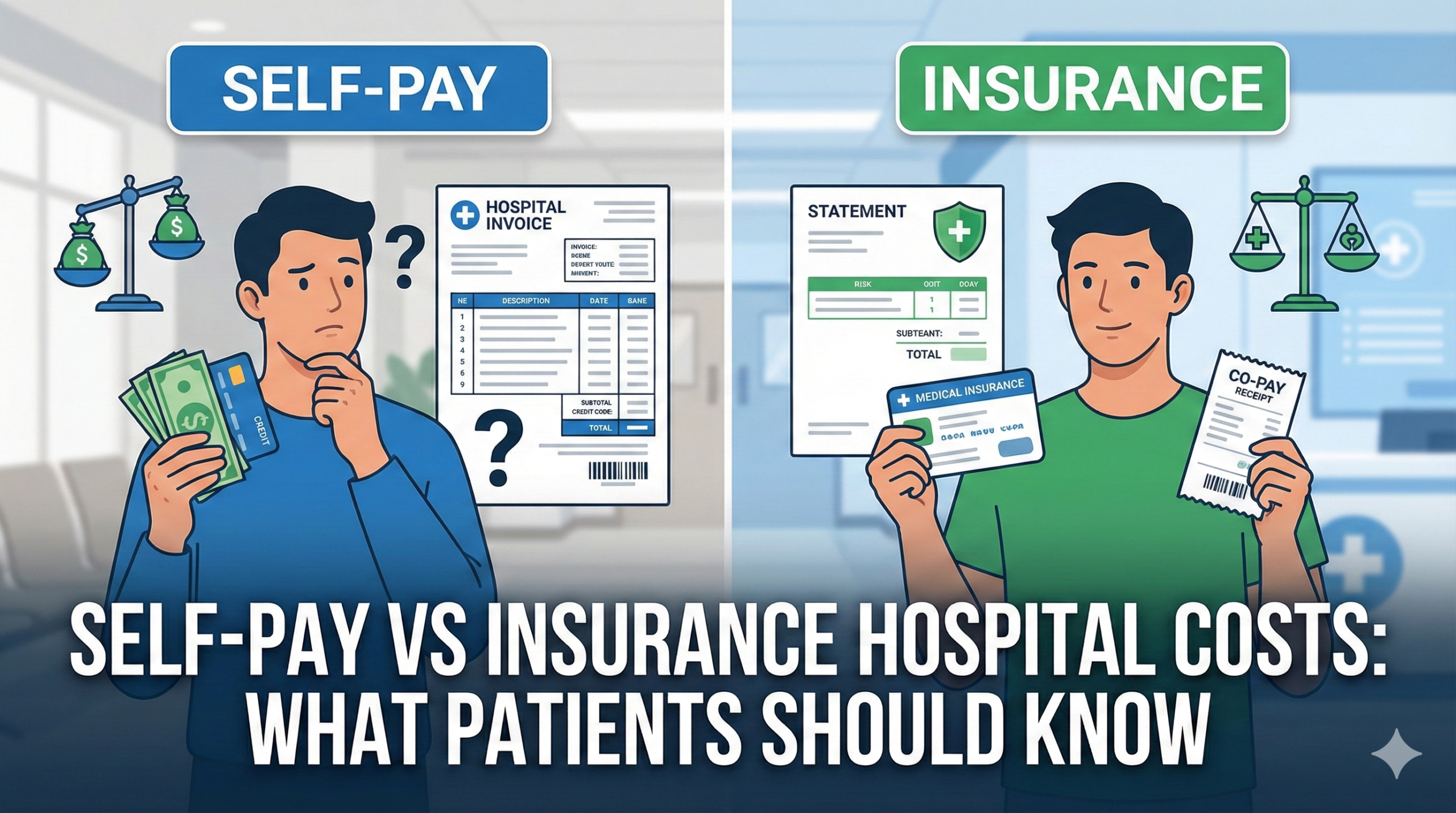
Hospital care can be financially complex, especially when patients must decide between using health insurance or paying out of pocket. In top-tier healthcare systems, the difference between self-pay hospital costs and insurance-based billing can be substantial—and often confusing.
For patients, caregivers, and healthcare professionals alike, understanding how these payment models work is essential for informed decision-making. This guide explains the key differences between self-pay and insurance hospital costs, why prices vary so widely, and what patients should consider before treatment—without offering medical or financial advice.
What Does “Self-Pay” Mean in Hospital Care?
Self-pay refers to patients who pay directly for hospital services without using public or private health insurance. This may include:
- International patients
- Uninsured individuals
- Patients choosing not to use insurance for specific services
- Those seeking care outside their insurer’s network
In many hospitals, self-pay patients are billed under a separate pricing structure, often negotiated in advance.
How Insurance-Based Hospital Billing Works
When insurance is used, hospital costs are influenced by:
- Contracted rates between hospitals and insurers
- Deductibles, copayments, and coinsurance
- Coverage limitations and preauthorization requirements
- Network status (in-network vs out-of-network)
Importantly, the list price of a hospital service is rarely what insurers actually pay. Instead, insurers negotiate discounted rates that may differ significantly from published charges.
Why Hospital Costs Differ Between Self-Pay and Insurance
Hospital pricing is shaped by multiple factors, including:
- Negotiated contracts: Insurers negotiate rates that may be higher or lower than self-pay packages.
- Administrative complexity: Insurance billing involves extensive documentation and processing.
- Bundled pricing: Self-pay patients may receive all-inclusive estimates covering hospital fees, physician fees, and anesthesia.
- Risk management: Hospitals price services differently based on payment certainty.
As a result, self-pay costs are sometimes lower, similar, or higher than insured costs depending on the situation.
Typical Cost Differences: Self-Pay vs Insurance
While exact pricing varies, general patterns often include:
| Aspect | Self-Pay | Insurance |
|---|---|---|
| Pricing Transparency | Often clearer upfront | Determined after claims |
| Negotiation | Possible before treatment | Limited to plan terms |
| Billing Complexity | Lower | Higher |
| Payment Timeline | Often prepaid or partial | Billed after care |
| Coverage Protection | None | Based on policy |
These differences explain why some patients request self-pay estimates even when insured.
When Self-Pay May Be Considered
Patients may explore self-pay options when:
- Seeking care abroad or outside insurance networks
- Undergoing elective or scheduled procedures
- Facing high deductibles or limited coverage
- Requiring bundled pricing certainty
Hospitals often have financial counseling offices to explain these options clearly.
When Insurance Coverage May Be Preferable
Insurance may be beneficial for:
- Emergency or unplanned hospitalizations
- Complex, long-term treatments
- Situations involving multiple admissions
- Patients eligible for public healthcare programs
Insurance can provide protection against unexpectedly high medical expenses, depending on the policy.
Understanding Bundled Hospital Pricing
Bundled pricing refers to a single quoted price covering multiple components of care, such as:
- Hospital stay
- Surgeon and anesthesiologist fees
- Diagnostic tests
- Post-procedure monitoring
This model is more common for self-pay and international patients and is designed to reduce billing uncertainty rather than guarantee outcomes.
International Patients: A Special Case
For international patients, insurance coverage may not apply across borders. As a result:
- Self-pay is the standard model
- Hospitals often provide international patient coordinators
- Cost estimates are usually issued before travel
This is why many globally recognized hospitals offer dedicated international pricing structures.
What Patients Should Ask Hospitals Before Treatment
To avoid confusion, patients may consider asking:
- Is a self-pay estimate available?
- What services are included in the quoted cost?
- Are physician fees billed separately?
- What happens if care needs change?
- Are refunds or adjustments possible?
Clear communication improves transparency and financial preparedness.
Common Misconceptions About Hospital Pricing
- “Insurance always makes care cheaper.” Not always—out-of-network care can be costly.
- “Self-pay means lower quality care.” Care standards are the same regardless of payment method.
- “Hospital prices are fixed.” Many hospitals review pricing on a case-by-case basis.
Understanding these realities helps patients navigate care more confidently.
How Hospitals Support Financial Decision-Making
Leading hospitals in top-tier countries provide:
- Financial counseling services
- Written cost estimates
- Payment plans or deposit structures
- Coordination with insurers or embassies (for international patients)
These services exist to improve transparency—not to influence medical decisions.
Frequently Asked Questions
Q: Can insured patients choose to self-pay?
A: In some cases, yes. Patients may request self-pay pricing for certain services, subject to hospital policy.
Q: Are self-pay patients treated differently?
A: No. Clinical care standards remain the same regardless of payment method.
Q: Do self-pay prices include complications?
A: Typically, estimates are based on expected care. Hospitals explain how changes in treatment may affect costs.
Q: Is self-pay common for international patients?
A: Yes. Most international patients pay directly or use international insurance plans accepted by the hospital.
Q: Who explains hospital costs to patients?
A: Hospital financial counselors or international patient coordinators usually provide cost information.
Conclusion
Understanding the differences between self-pay and insurance hospital costs empowers patients to make informed, financially aware decisions. While neither option is universally better, transparency, planning, and communication play a critical role in navigating hospital care effectively.
Patients are encouraged to engage directly with hospitals and insurers to clarify coverage, costs, and expectations before treatment whenever possible.